
Decks for the new commanders in The Hobbit
Tby @tim
The Hobbit came out on August 14, 2026, and we built six decks around six of its new commanders. Three of them care about one creature type: Bifur, Melodic Rider repeats the triggers of Dwarves once you have an enduring story, Thranduil, the Elvenking takes the activated abilities of Elf cards in your graveyard, and Beorn the Fierce pumps Bears. The Queen of Dale, Bard, King of Dale, and Smaug, Wicked Worm care about no creature type, so their decks are built from cards that draw, make tokens, or make Treasures, whatever creatures those cards come on.
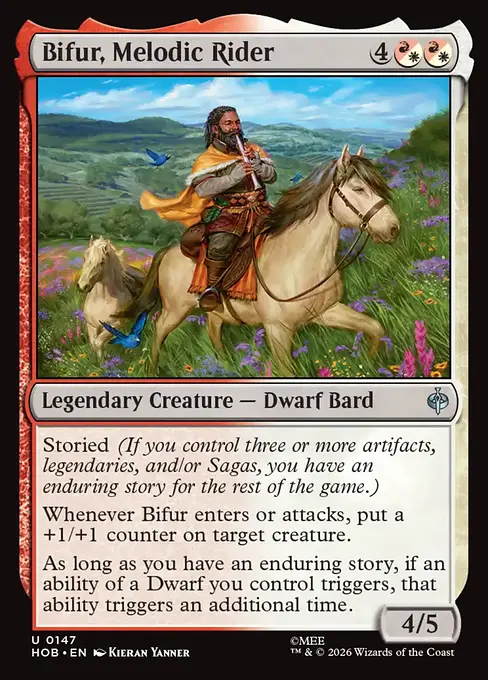
Bifur, Melodic Rider
 Buy on TCGplayer
Bifur, Melodic Rider puts a +1/+1 counter on target creature when it enters and whenever it attacks. Once you have an enduring story, each triggered ability of a Dwarf you control triggers an additional time. The deck fills the board with Dwarves that do things when they enter or deal damage, then attacks with all of them while those triggers repeat.
Storied is the rule to watch. You need to control three or more artifacts, legendaries, and/or Sagas only once, and the enduring story stays for the rest of the game even if they all leave. The Axe token from Iron Hills Blacksmith, the Treasure from Dori, Bearer of Friends, and a Saga like The Mountain-king's Return get you there before Bifur comes down. After that, Thorin Oakenshield gives your artifacts and creatures ward  as long as it stays on the battlefield.
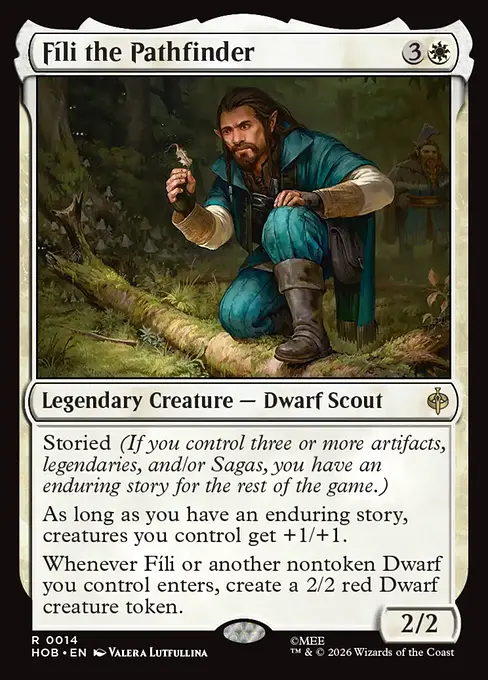
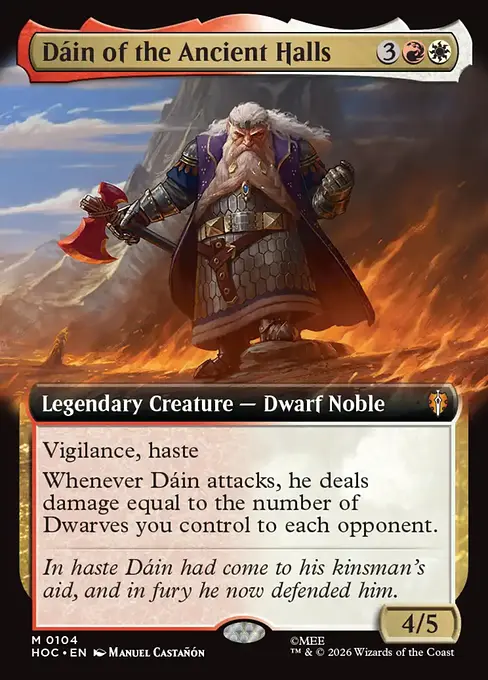
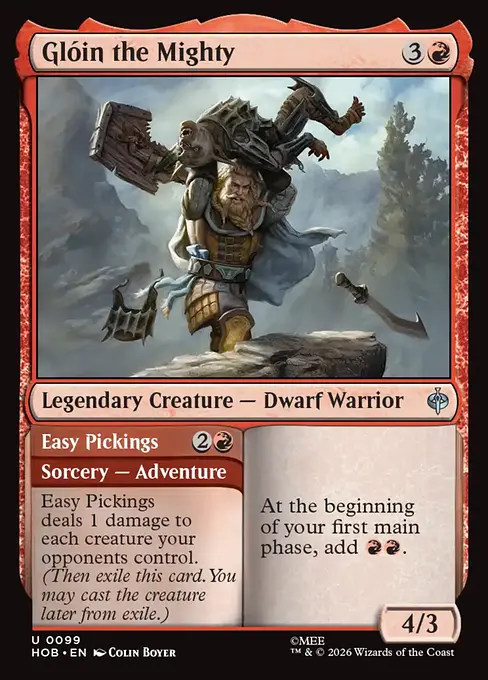
Glóin the Mighty // Easy Pickings shows what the repeat does. Glóin the Mighty is a Dwarf, so its trigger at the beginning of your first main phase adds  twice, four red mana every turn. Fíli the Pathfinder makes a 2/2 Dwarf token whenever it or another nontoken Dwarf enters, and those tokens count for Dáin of the Ancient Halls, which deals damage equal to the number of your Dwarves to each opponent whenever it attacks. Thorin, Company's Leader makes two Treasures each time a Dwarf deals combat damage to a player, so one wide attack pays for the next turn.
We hold Fumigate until we are behind, because it destroys our Dwarves along with everything else.
The Queen of Dale
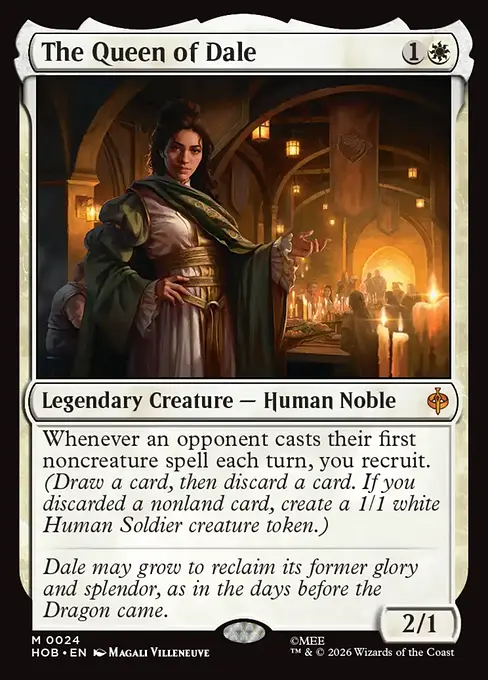
The Queen of Dale has you recruit whenever an opponent casts their first noncreature spell each turn: you draw a card, discard a card, and get a 1/1 Human Soldier if the discard was not a land. The deck turns those Soldiers and the extra cards into a wide board that attacks together.
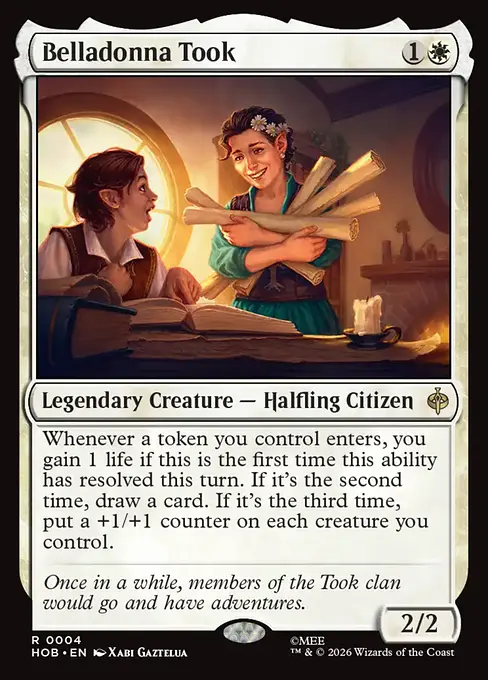
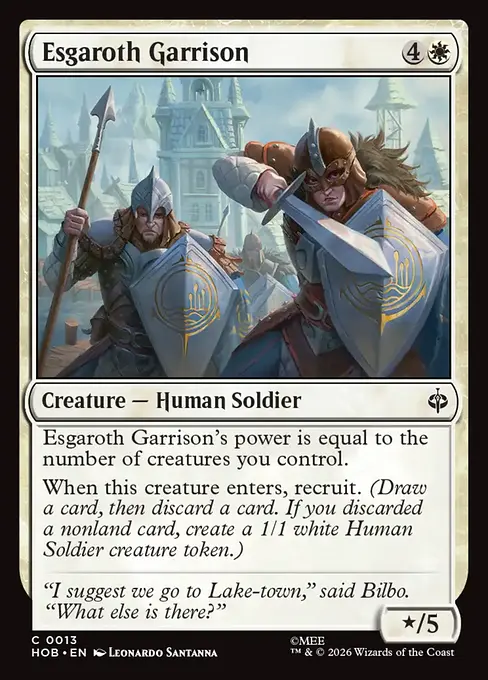
Each opponent has their own first noncreature spell, so in a four-player game the Queen can recruit three times in one turn. Every recruit asks the same question: discard a land, or discard a spell for the Soldier. We discard spells once we have five lands, because the payoffs want bodies. Belladonna Took gains you 1 life on the first token each turn, draws a card on the second, and puts a +1/+1 counter on each creature you control on the third. Esgaroth Garrison recruits as it enters and has power equal to the number of creatures you control.
Myrel, Shield of Argive makes a 1/1 Soldier for each Soldier you control when it attacks, and the Queen's Human Soldiers count. Myrel and Voice of Victory also stop opponents from casting spells during your turn, which shuts the Queen off on that turn. We play them anyway, since opponents cast most of their spells on their own turns.
Hour of Reckoning destroys only nontoken creatures, and your tokens can tap to help cast it. The Queen dies to it too, so we cast it when our Soldiers outnumber everything else on the table.
Thranduil, the Elvenking
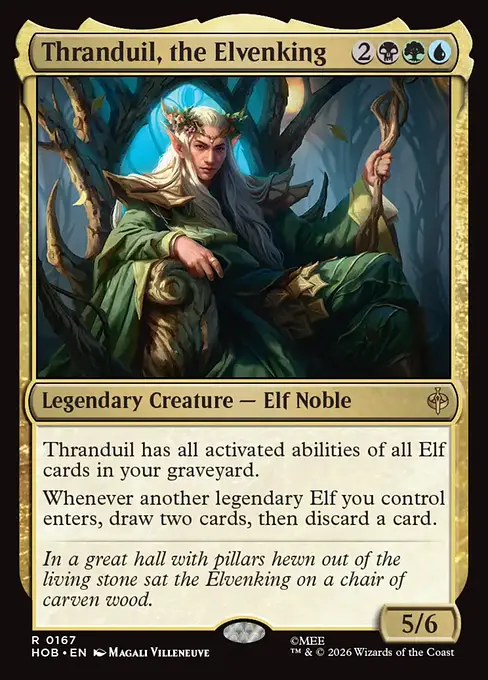
Thranduil, the Elvenking has every activated ability of every Elf card in your graveyard, and whenever another legendary Elf you control enters, you draw two cards and discard one. You loot often and put Elves in the graveyard on purpose, so Thranduil ends up doing their jobs on its own.
That gives you a choice each turn: cast the Elf in your hand, or discard it to Rona, Herald of Invasion // Rona, Tolarian Obliterator or Thrór's Map so Thranduil gets its ability. With Elvish Archdruid in the graveyard, Thranduil taps for  for each Elf you control. Most of these abilities need
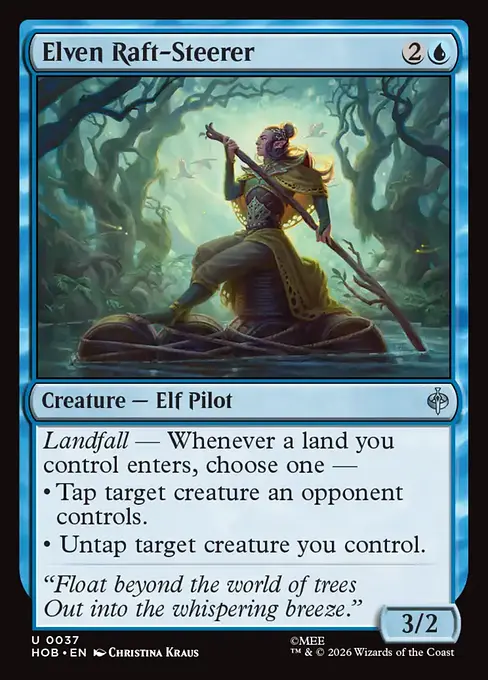
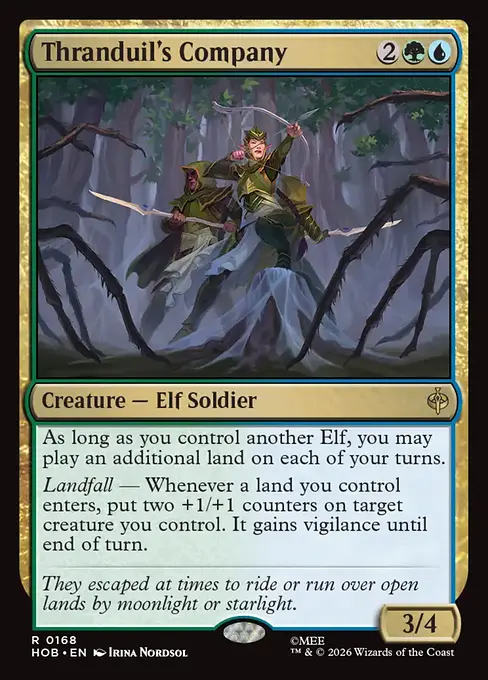
 , so Thranduil uses one per turn. Elven Raft-Steerer gets around that, since each land that enters can untap Thranduil, and Thranduil's Company lets you play an extra land each turn while you control another Elf. Elrond, Moon-Reader draws a card the first time each turn you activate a creature's ability, and Thranduil's activations count.
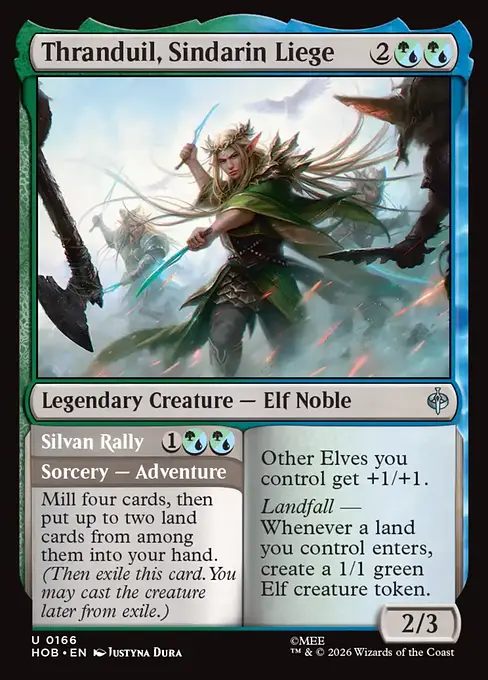
Thranduil, Sindarin Liege // Silvan Rally is the legendary Elf that sets off the commander's draw, and its landfall makes a 1/1 Elf token for each land. We cast Silvan Rally first to mill four and take up to two lands, then cast the creature from exile later. Muldrotha, the Gravetide can recast an Elf from the graveyard, but Thranduil loses that card's ability when it leaves, so we use Muldrotha on the deck's other permanents.
Bard, King of Dale
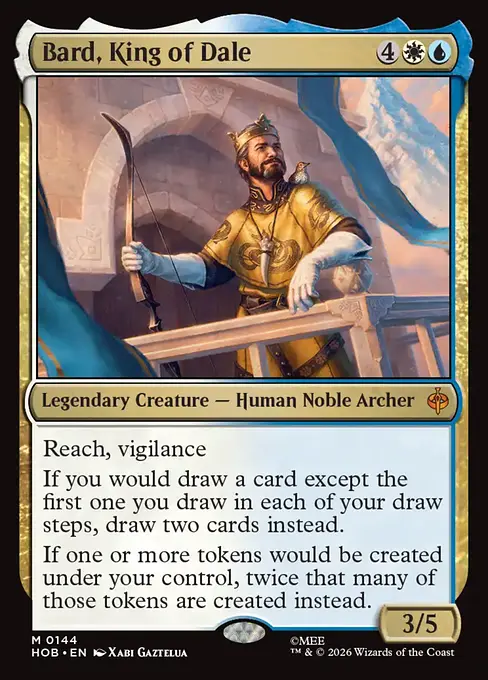
Bard, King of Dale makes you draw two cards instead of one for every draw except the first in your draw step, and it makes twice as many of every token you create. Most of what we play here draws extra cards or makes tokens, and Bard doubles both.
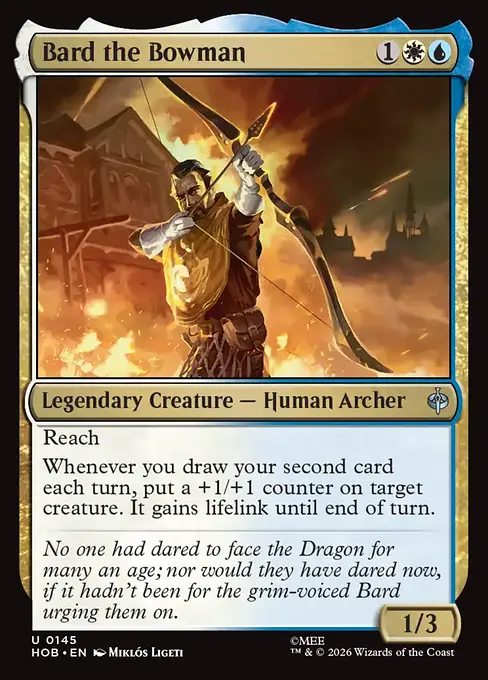
The draw step exception is the line to read twice. On other players' turns you have no draw step, so every draw there becomes two. Bard the Bowman, Lakeshore Apothecary, and Master's Councillors each trigger on your second card each turn, so a single draw on an opponent's turn sets them off. For that reason we cast Plunder the Trollshaws and the draw mode of Confusticate and Bebother at the end of an opponent's turn.
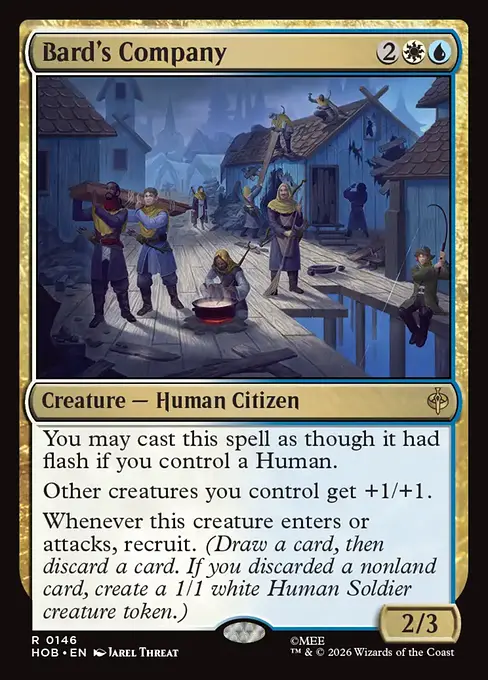
Tokens double the same way. Bard's Company recruits when it enters and when it attacks, so you draw two before you discard one, and a nonland discard makes two Soldiers. Talrand, Sky Summoner makes two Drakes for each instant or sorcery you cast, and with Exalted Sunborn also out, every token comes in fours. Two tokens entering at once trigger Belladonna Took twice, so one spell under Talrand gains you 1 life and draws you two cards.
Smaug, Wicked Worm
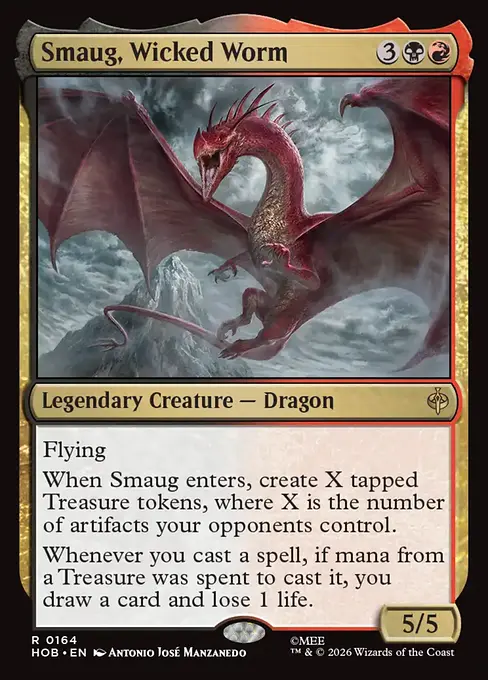
Smaug, Wicked Worm draws you a card and makes you lose 1 life whenever you cast a spell that Treasure mana helped pay for, and when it enters it makes a tapped Treasure for each artifact your opponents control. The deck makes its own Treasures every turn, so most spells after the commander comes down also draw a card.
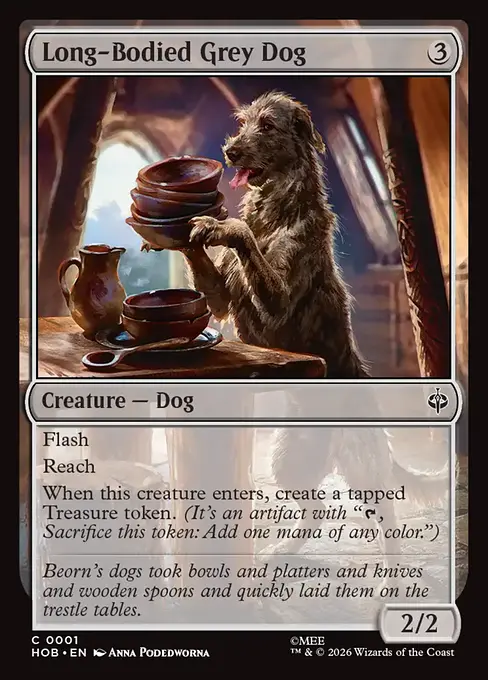
One Treasure is enough. Spend it on a single mana of Terminate and you draw the same card a big spell would give you. That is why Kalain, Reclusive Painter, Swashbuckler Extraordinaire, Long-Bodied Grey Dog, and Deadly Dispute are here, along with The Sackville-Bagginses, which makes an opponent lose 1 life each time you sacrifice a token, and a spent Treasure is a sacrificed token. Rain of Riches gives your first Treasure-paid spell each turn cascade, so that spell draws a card and casts a second one for free. We do not count on the commander's enters trigger, because many tables play few artifacts.
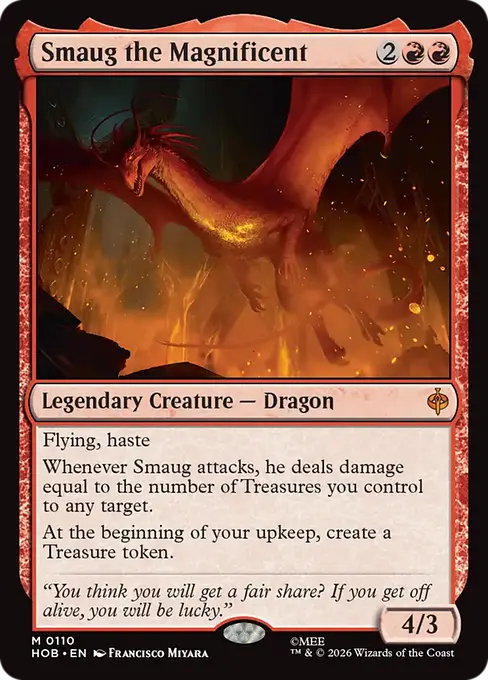
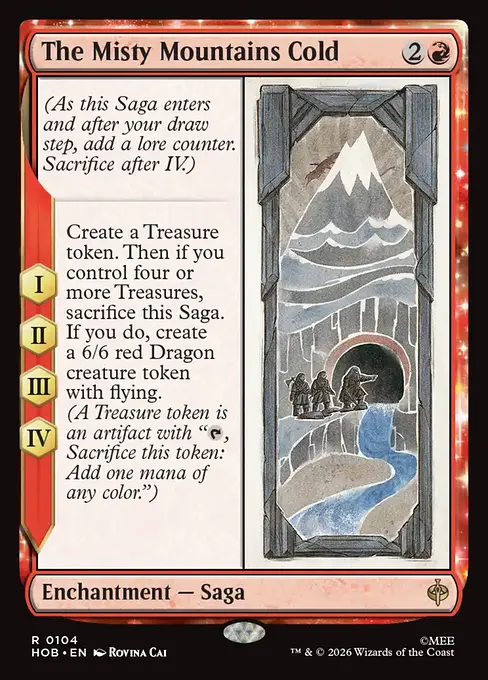
The choice every turn is whether to spend a Treasure or keep it. Smaug the Magnificent makes one each upkeep and, whenever it attacks, deals damage equal to the number of Treasures you control to any target. The Misty Mountains Cold makes a Treasure on each chapter, and if you then control four or more Treasures, you sacrifice it and create a 6/6 flying Dragon token. We spend Treasures on spells until one of those two is on the battlefield, then start saving them.
Beorn the Fierce
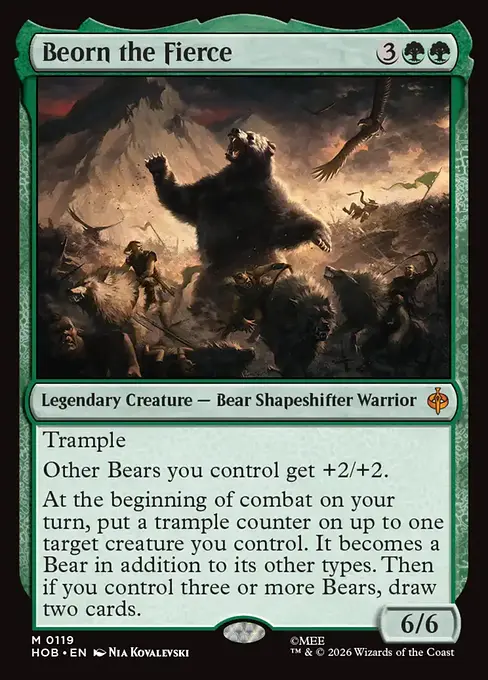
At the beginning of combat on your turn, Beorn the Fierce puts a trample counter on one of your creatures and makes it a Bear, then draws you two cards if you control three or more Bears. Its other Bears get +2/+2, so the deck builds a board of Bears and attacks with big ones.
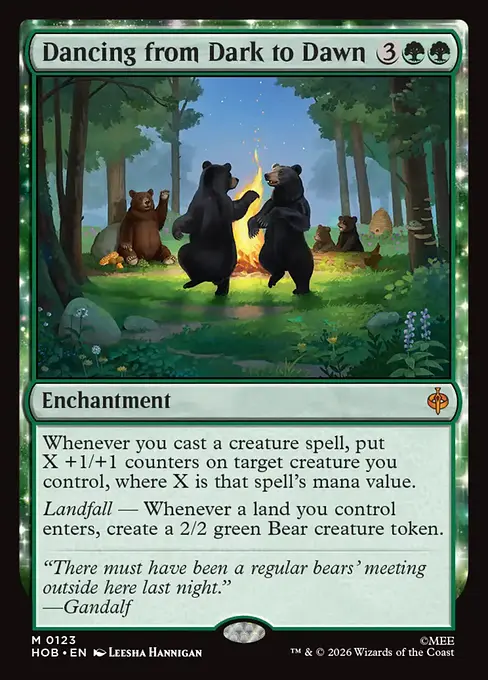
Nothing ends that Bear change, so each turn Beorn adds one more Bear that stays a Bear. Dancing from Dark to Dawn makes a 2/2 Bear token whenever a land enters, and each token gets the +2/+2. For  , Mother Bear exiles itself from the graveyard for two more Bear tokens. Maskwood Nexus makes every creature you control every creature type, so all of them are Bears and the two cards come every combat once you have three creatures.
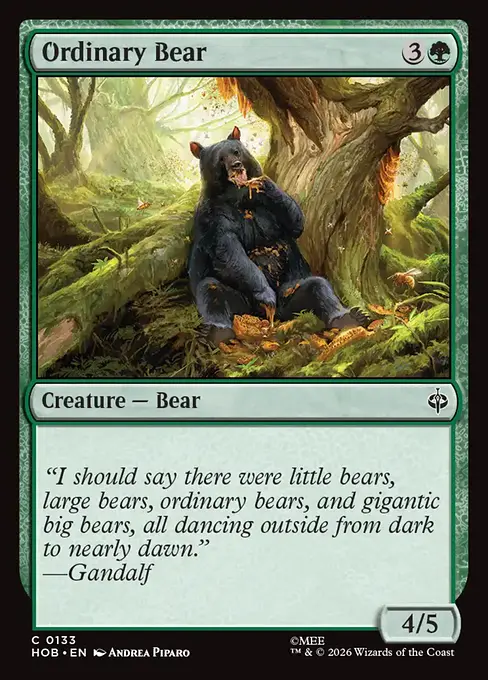
Ruxa, Patient Professor gives creatures with no abilities +1/+1 and lets each of them deal combat damage as though it weren't blocked. Ordinary Bear, Grizzly Bears, and Bear Cub have no abilities, and Ruxa returns cards like them from the graveyard to your hand when it enters or attacks. A trample counter is an ability, though, so the creature Beorn picks stops counting for Ruxa. We put the counter on a creature that already has text, such as Toski, Bearer of Secrets, which then gets +2/+2 as a Bear and draws a card for every creature of yours that deals combat damage to a player.
Start with The Queen of Dale: it is one color, and the decision it hands you most often is what to discard. Bard, King of Dale fits a player who likes doing things on other players' turns, Beorn the Fierce fits one who wants to attack with big creatures every turn, and Smaug, Wicked Worm fits one who enjoys deciding when to spend and when to save. Take Bifur, Melodic Rider if you like meeting a condition early and playing with it on for the rest of the game, and Thranduil, the Elvenking if your favorite cards are the ones in your graveyard.
More articles
Market report ·
Magic card market report, week of November 14, 2026
Most of the month's steepest price falls are Reality Fracture printings, and some rising cards had every price go up.
Set decks ·
Decks for the new commanders in Star Trek
Six decks we built around six of its new commanders, with the plays, choices, and easy-to-miss rules that decide each one.
Theme guide ·
Legendary Payoff in Commander
The cards cEDH decks play most, a full five-color decklist, and what to look for in each card.