
This week's box
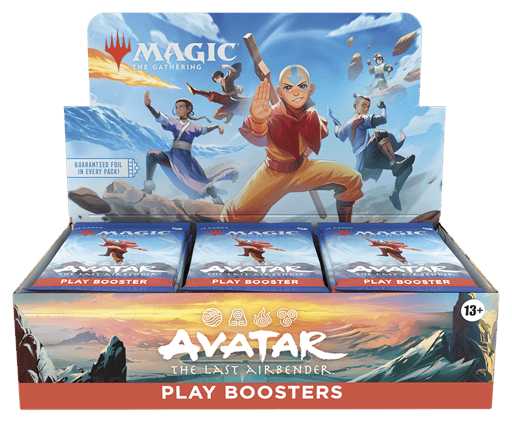
Avatar The Last Airbender Play Booster Box
Avatar: The Last Airbender
Released 2025-11-21
Sign in free to see this week's numbers"Expected" is a distribution, never guaranteed profit.
Know whether to crack the box or hold it.
What you'd actually keep from opening a sealed box: after TCGplayer's commission and payment fee, with the sub-$1 bulk that has no singles market left out.
This week's box is Avatar: The Last Airbender. Each week, one box's full breakdown is free with an account. The paid Expected Value board ranks every sealed product and updates daily.
Start with what's actually in the box
Expected Value begins with a real, sealed booster box and its current sealed price. That price is the number every other figure here has to beat: if a seller can't clear more than the box costs, holding it sealed wins.
- A real sealed product, priced at what it sells for today
- The sealed price is the bar the singles inside have to clear
- Everything below is measured against it
What a seller keeps after every fee
Most EV math adds up retail prices. We take off TCGplayer's commission and payment fee and leave out the sub-$1 bulk that has no singles market, so the figure is what lands in a seller's account.
- TCGplayer commission and the percentage payment fee removed
- Sub-$1 cards with no real singles market drop out of the sum at zero
- The gross total stays visible; the crack-or-hold number is the one after fees and bulk
One average hides the spread you actually open
One average pretends every box opens the same. You see the typical box, a good day (one box in ten), and the odds a crack beats the sealed price.
- P50: what a typical opener walks away with
- P90: the good day, which one opening in ten reaches
- The odds a crack actually beats the box
The one number the decision turns on
What you'd keep, minus the sealed price, is the crack edge: the answer to crack or hold once fees and bulk come out. Positive means the singles inside are worth more than the sealed box, after everything a seller actually loses converting them to cash.
- What you'd keep, minus the sealed box price
- Positive means cracking beats holding, after fees
- The same number the ranked board sorts every product by
When we can't be sure, we don't publish
When more than 5% of a box's value sits in cards we can't price, we withhold the figure instead of faking it. One unpriced chase card can prop a naive sum far above what a typical opener ever sees.
- Withheld when more than 5% of the value can't be priced
- Weighted by value, so a few missing chase rares can't hide
- A caution when the figure rides cards near their recent highs
What a seller actually keeps
A gross sum of card prices tells you what a box could theoretically contain. Expected Value tells you what a seller would actually clear, 86.75% of each dollar of singles once TCGplayer's commission and payment fee come out, which is the number the decision turns on.
We sell on TCGplayer, so the fees come out of our end
Commission and the percentage payment fee come off every sale a seller makes, ours included, so the number here is what's left after them: the money you'd actually keep. The ranked board sorts by the same number.
Crack it, log the pulls, score the call
Open a break, enter each card as you pull it, and watch a running total build against what the sealed box itself sells for.
Wrappers still on the table.
Logging a break is free. Scoring it against expected value sits on the paid side: the EV the day you opened the box, and how much of the result was pull luck against how much was the baseline moving under you. That side comes with Expected Value, for $5 a month.
Break scorecard · against EV at open
Free · the break you log
Paid side · the call you made
What the scorecard answers
The free side is your running total against the box's own price. The paid side splits how lucky your pulls were from how much the market moved, and comes with Expected Value for $5 a month.
Every sealed product in the catalog, ranked
With a free account, this week's box is yours to read in full. The paid board ranks every sealed product by what you'd keep opening it, and leaves a box blank when too much of it can't be priced.